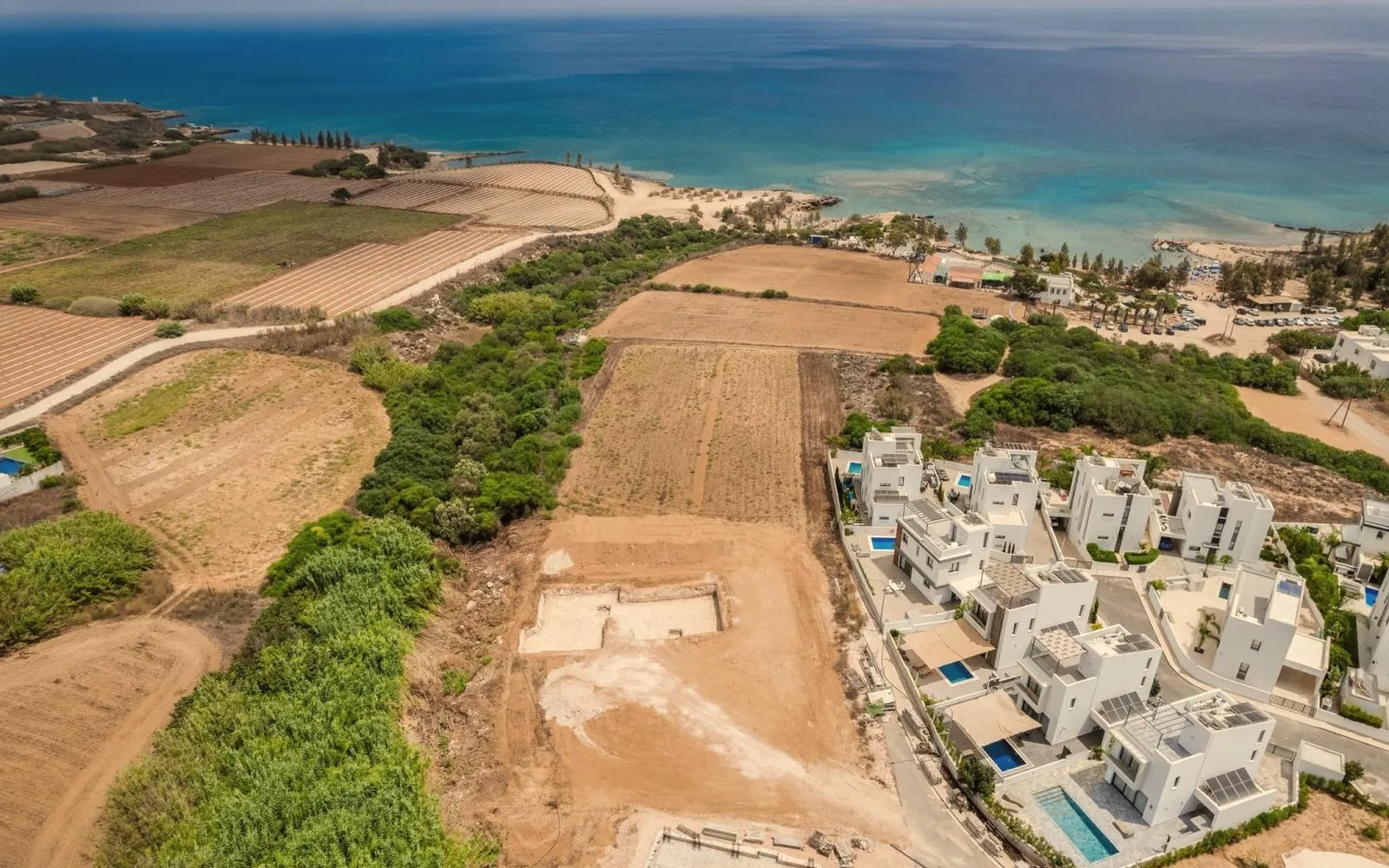
What antiparochi is
Antiparochi (αντιπαροχή) is the Cypriot land-for-property exchange. A landowner provides the land, and a developer funds the design, permits and construction. Instead of being paid in cash, the landowner receives an agreed share of the finished homes. It is long established in Cyprus and Greece, and it is set up by contract rather than under a dedicated law.
How Best Select uses it
In the Best Select model, you are the landowner. You buy the land outright, personally or through your company, and at the same time sign an exchange agreement with a proven developer. The developer builds the scheme and transfers your agreed allocation of homes to you, which you can keep, sell or rent.
- You own a specific, registered piece of land from day one.
- You do not fund the construction.
- Your return arrives as finished homes, rather than as a promise to pay.
- Best Select coordinates every stage, with your own lawyer reviewing the documents.
How the Best Select model works
What a good exchange agreement covers
- Exactly which homes you receive: their position, size, specification and finishes.
- The programme: permit, construction and completion, defined by milestones that can be checked objectively.
- The developer's obligations, guarantees and insurance.
- Remedies if the developer is late or fails to deliver.
- How and when ownership passes, including phased transfers and title deeds.
- Who bears which taxes and fees.
- Independent valuation by a licensed valuer.
Lawyers also recommend depositing the agreement at the Land Registry, and in some cases structuring the project through a special purpose company.
Tax: take advice on both sides
The exchange can count as a disposal of land for capital gains tax, and VAT and transfer fees can arise on the land and on the homes transferred. Lawyers also mention a 0.4% levy on the land's value. How each applies depends on the structure, on whether the parties are in business, and on timing. This is the part of an antiparochi that most needs specialist tax advice, and the agreement should state clearly who bears each cost.
The risks, and how they are managed
| Risk | How it is managed |
|---|---|
| Permit refused or delayed | Clear timing and remedies in the agreement; your land remains yours |
| Developer delay or failure | Choose a developer with a delivery record; milestones, guarantees and default remedies |
| Existing mortgages on the land | Full searches before purchase; charges cleared at completion |
| Title deeds | Agreed process and timing for transfer of your homes |
| Tax surprises | Tax allocation agreed in writing, with your own adviser |
Asset backing reduces risk; it does not remove it.
Questions
What does antiparochi mean?
It is the Greek and Cypriot term for a land-for-property exchange: the landowner provides the land and receives an agreed share of the finished homes, instead of cash, while the developer funds and builds.
Who pays for construction in an antiparochi?
The developer funds the design, permits and construction. The landowner contributes the land.
Is antiparochi regulated by a specific law?
No. It is a contractual arrangement, so the quality of the exchange agreement, and of your legal advice, is essential.
Sources
- Chambers & Co: Land-for-property exchanges in Cyprus (antiparochi) (Jan 2026)
- IMPK Lawyers: Understanding land-for-property exchanges in Cyprus (Apr 2025)
- A. Danos & Associates via Mondaq: Real estate transactions in Cyprus, FAQs (Sep 2026)
- PwC Worldwide Tax Summaries: Cyprus, other taxes (reviewed Aug 2026)